
Ballerina Flats Wholesale Manufacturer for Retailers
From the moment I design my Ballerina Flats, I keep wholesale buyers in mind. I work directly with manufacturers to offer you factory-direct pricing and reliable lead times. Whether you're stocking boutiques, department stores, or online catalogs, these flats deliver comfort without sacrificing style. Each pair uses soft, breathable lining, flexible outsole, and a seamless toe-box to reduce fatigue for long wearing. I offer a range of colors and finishes, plus customization options for branding, packaging, and label placement. Ordering is simple: bulk orders, repeat stock, and flexible MOQ designed for retailers. As a manufacturer myself, I control quality at source, ensuring consistent sizing, stitching, and durable adhesives. You can expect timely shipments, responsive service, and competitive wholesale rates that improve margins. I invite you to review our catalog, compare costs, and see why retailers prefer our Ballerina Flats for fashion-forward comfort.

Ballerina Flats Service Your Trusted OEM Partner
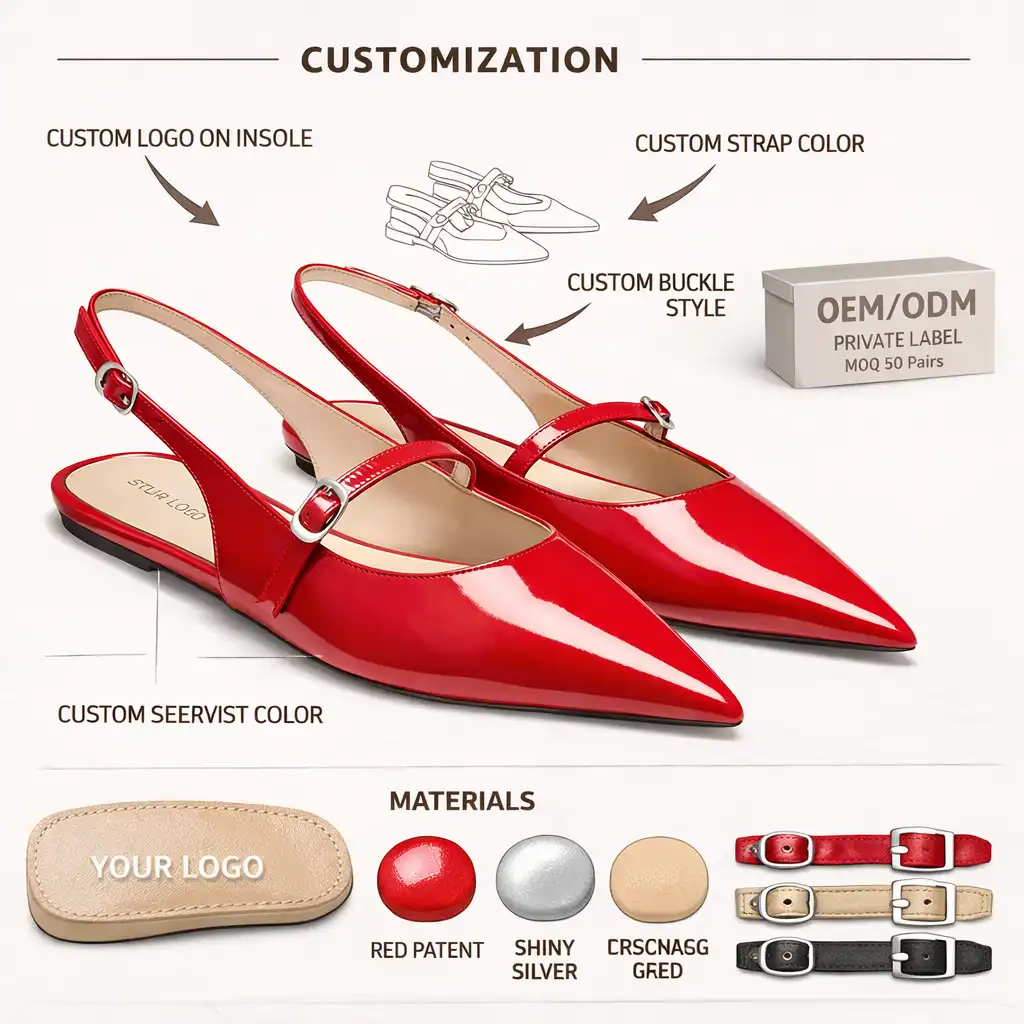
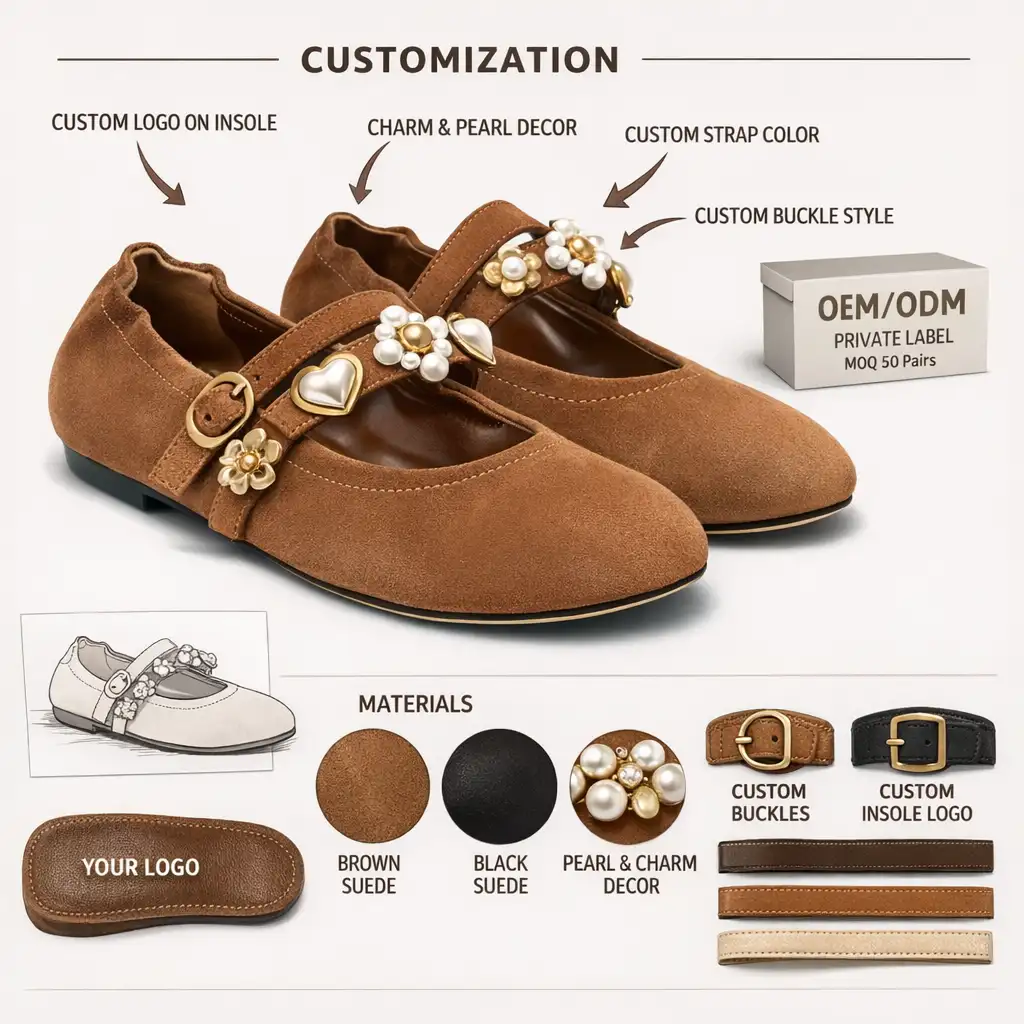
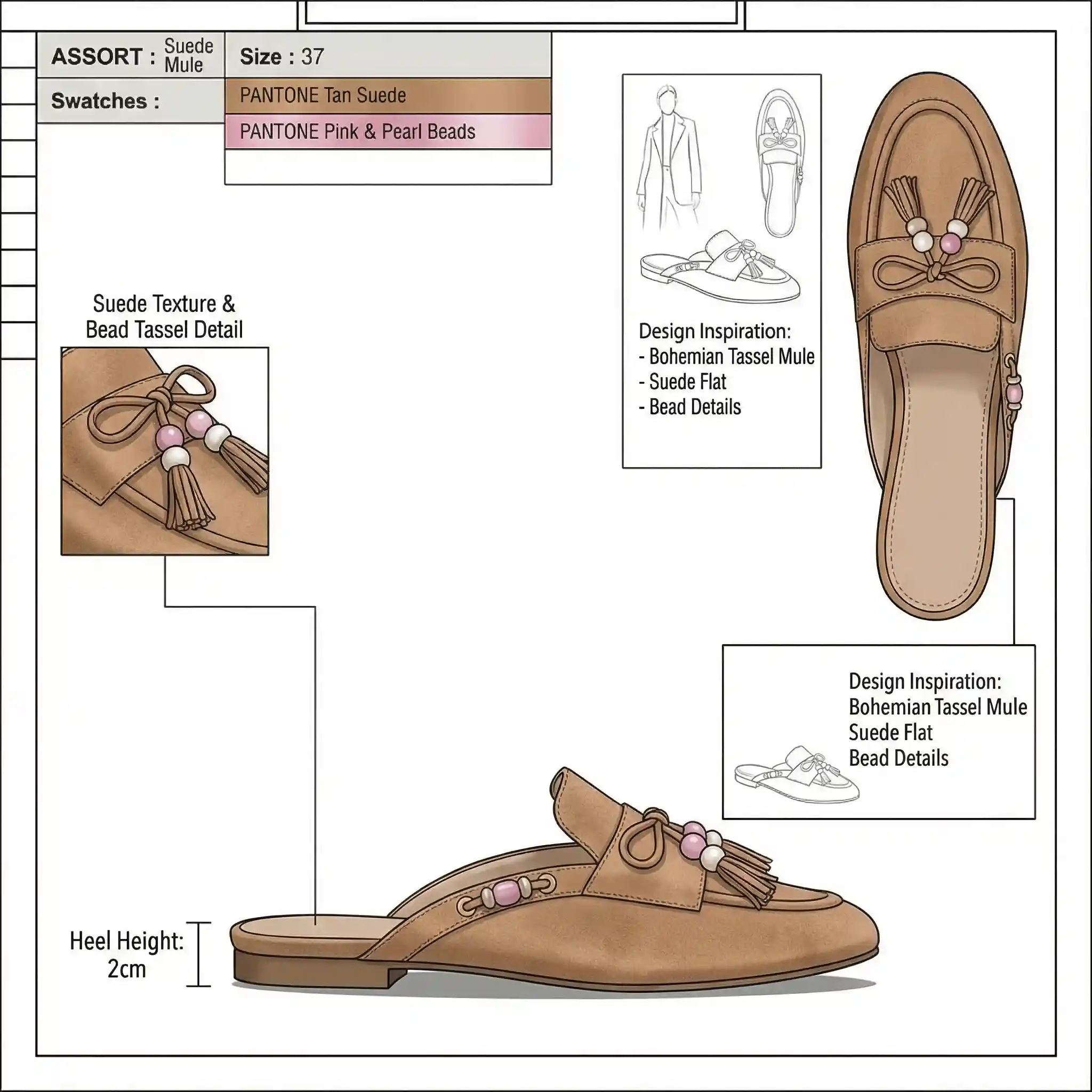
Global buyers seeking a dependable OEM partner for ballerina flats will value a turnkey path from concept to market. We support every step from design collaboration and pattern making to material selection (leathers, synthetic uppers, textiles), outsole and insole options, stitching, and last development. Rapid sampling, scalable MOQ, and multiple colorways keep your collections fresh while preserving uniform quality across production runs. Clear project timelines, transparent costing, and seamless communication help you synchronize launches with seasonal demand and regional requirements. As a trusted OEM partner, we prioritize quality, efficiency, and flexibility. Rigorous QC at pre-production, in-line, and final inspection minimizes defects; we provide private labeling and branding options, packaging customization, and sustainable material choices. Our manufacturing network supports large-volume orders and modest runs alike, with reliable lead times and logistics coordination for global shipments. Choose a partner who aligns with your brand standards and delivers consistent performance, enabling you to scale with confidence.
| Product Family | Material Type | Primary Process | Lead Time (days) | Monthly Capacity (units) | Defect Rate (%) | On-Time Delivery % | Setup Time (hours) | Surface Finish | Certifications |
|---|---|---|---|---|---|---|---|---|---|
| Ballerina Flats | Synthetic Leather | Assembly & Stitching | 14 | 80,000 | 0.8 | 97.5 | 6 | Matte | ISO 9001:2015 |
| Ballet Flats | PU Foam, Cloth | Cut & Sew | 10 | 60,000 | 0.6 | 98.2 | 5 | Satin | ISO 9001:2015, BSCI |
| Comfortable Slip-Ons | Microfiber | Lamination & Stitching | 12 | 75,000 | 0.9 | 96.8 | 7 | Glossy | ISO 9001:2015 |
| Classic Flats | Velvet Fabric | Sewing & Finishing | 9 | 50,000 | 0.4 | 99.1 | 4.5 | Matte-Sheen | ISO 14001 |
| Luxe Style Flats | Calf Leather | Molding & Stitching | 16 | 40,000 | 1.2 | 95.4 | 8 | Leather Grain | ISO 9001:2015, SGS |
| Minimalist Flats | Knit Textile | Knitting & Assembly | 11 | 70,000 | 0.5 | 97.9 | 3.5 | Matte | ISO 9001:2015, ISO 45001 |
| Rounded-Toe Flats | Synthetic Mesh | Thermal Bonding | 15 | 45,000 | 1.0 | 96.2 | 6.5 | Satin | ISO 9001:2015 |
| Strappy Flats | Faux Leather & PVC | Assembly & Finishing | 13 | 55,000 | 0.7 | 97.4 | 4 | High-Gloss | ISO 9001:2015 |
Related Products


Ballerina Flats Stands Out Where Service Meets Innovation
Top Selling Products





- Related Blog
- Reviews
- Reviews
