Design pain points caught by engineering, not compromised away
An extreme design is not a reason to “simplify” it. It is a problem engineering has to solve. These are the concerns we hear most often before sampling — and our answer to each one.
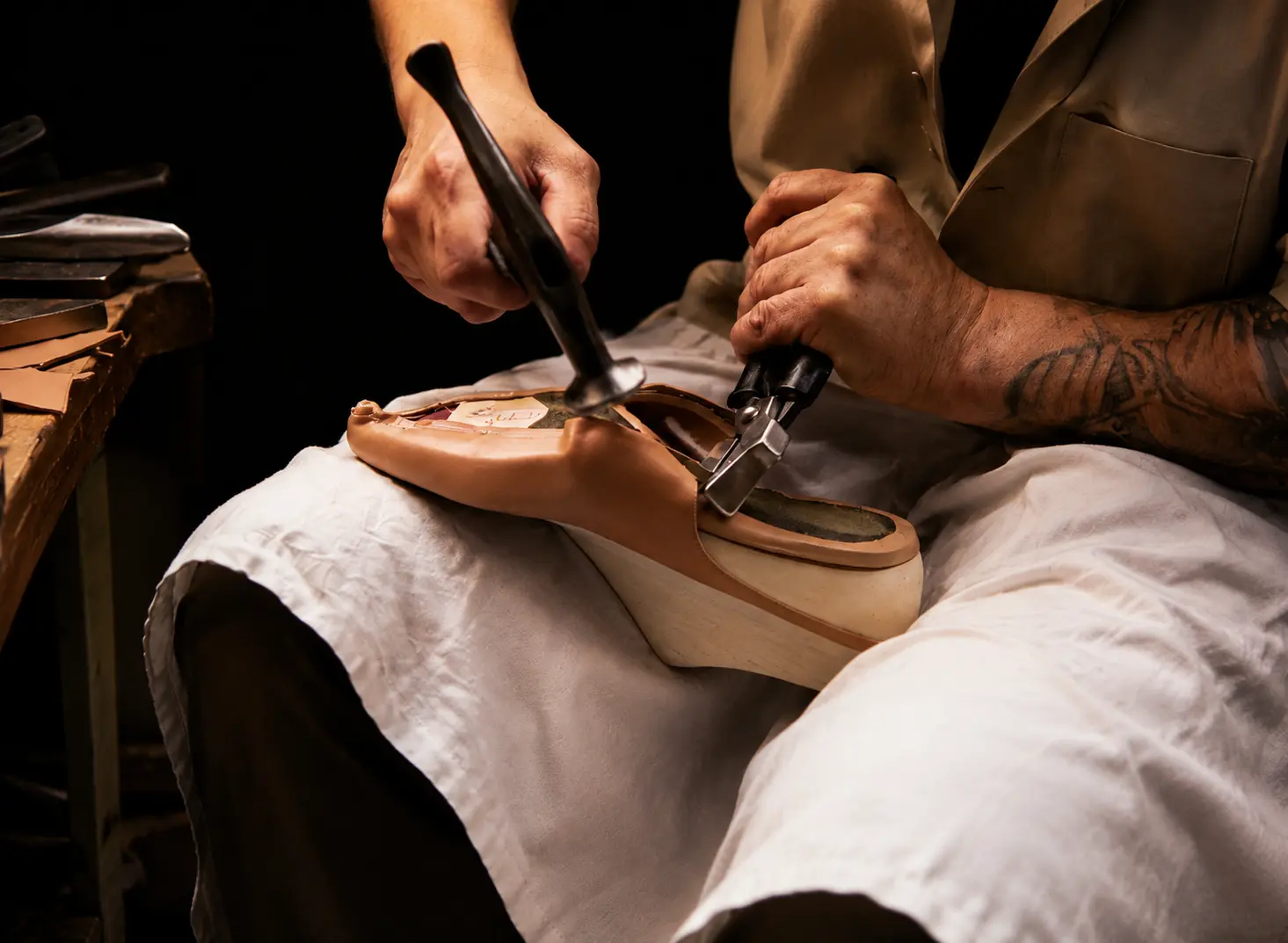
“The sample came back and it doesn't look like my design.”
→ The design direction is locked in writing and the approved sample becomes the benchmark — nothing drifts quietly.
“My extreme design will be 'simplified' into something easier to make.”
→ Proportions are held by engineering — internal support, reinforcement and purpose-built jigs — rather than compromised.
“The structure won't hold — the heel feels unsafe and the bag collapses.”
→ Last modification and balance correction, reinforcement board, rigid base board — the structure is proven before production.
“Extreme height looks good but hurts, and the hardware and detail cheapen it.”
→ Stability is solved as an engineering problem; hardware, tassels and surface finish are confirmed by small samples — premium feel validated, not promised.
Four business questions decide the technical solution
These four questions carry the pain points we hear most before a project begins — the timeline is too tight, the retail price is already fixed, the materials are unfamiliar. Their answers shape the plan as much as the design does.
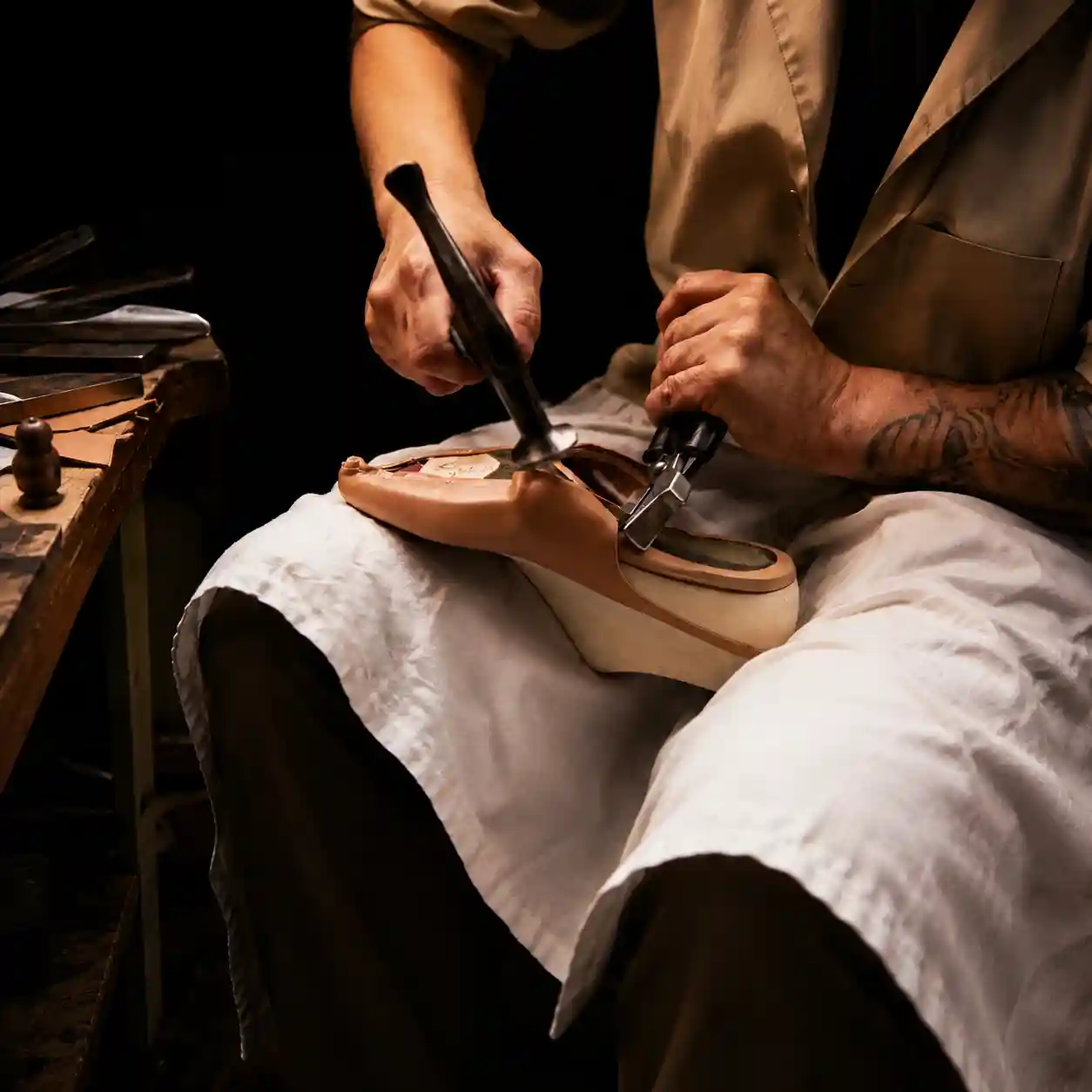
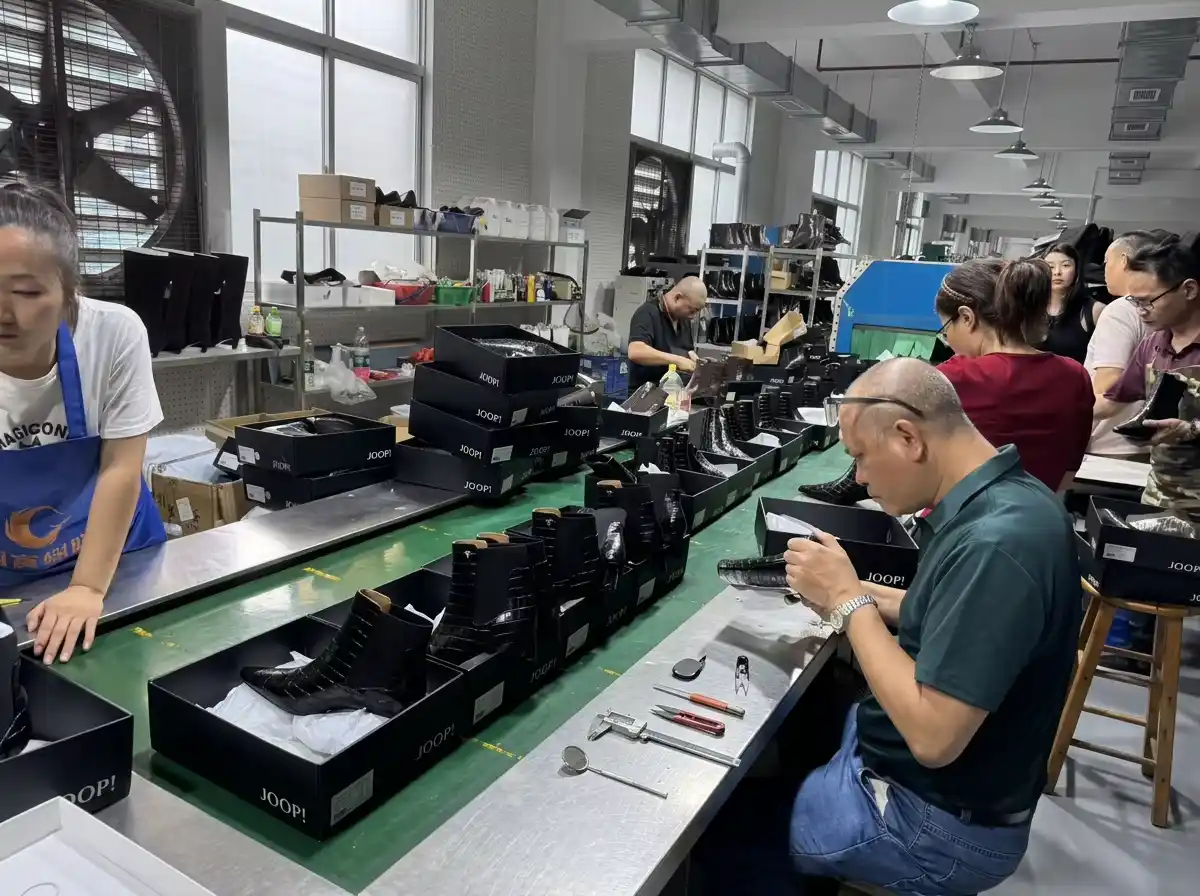
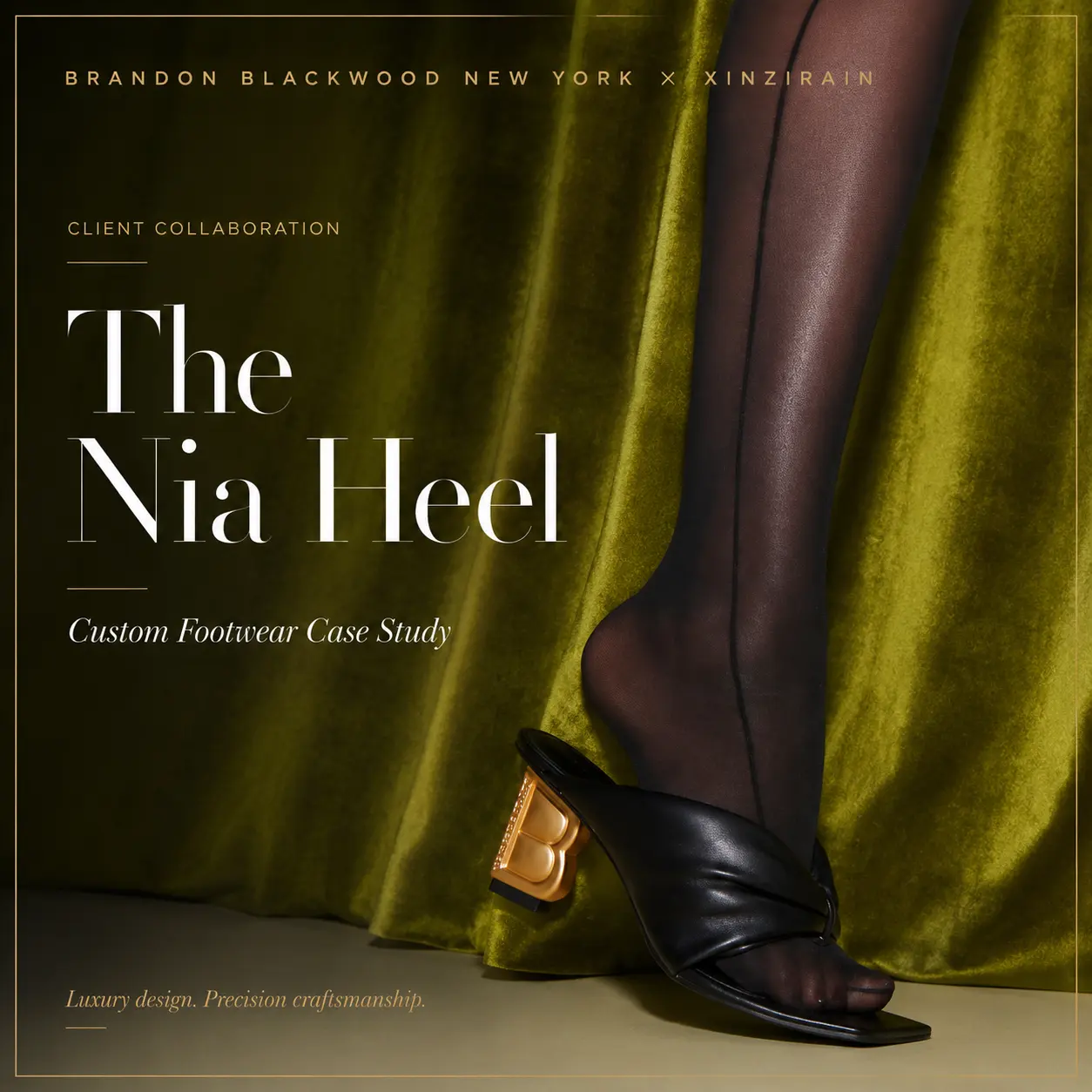
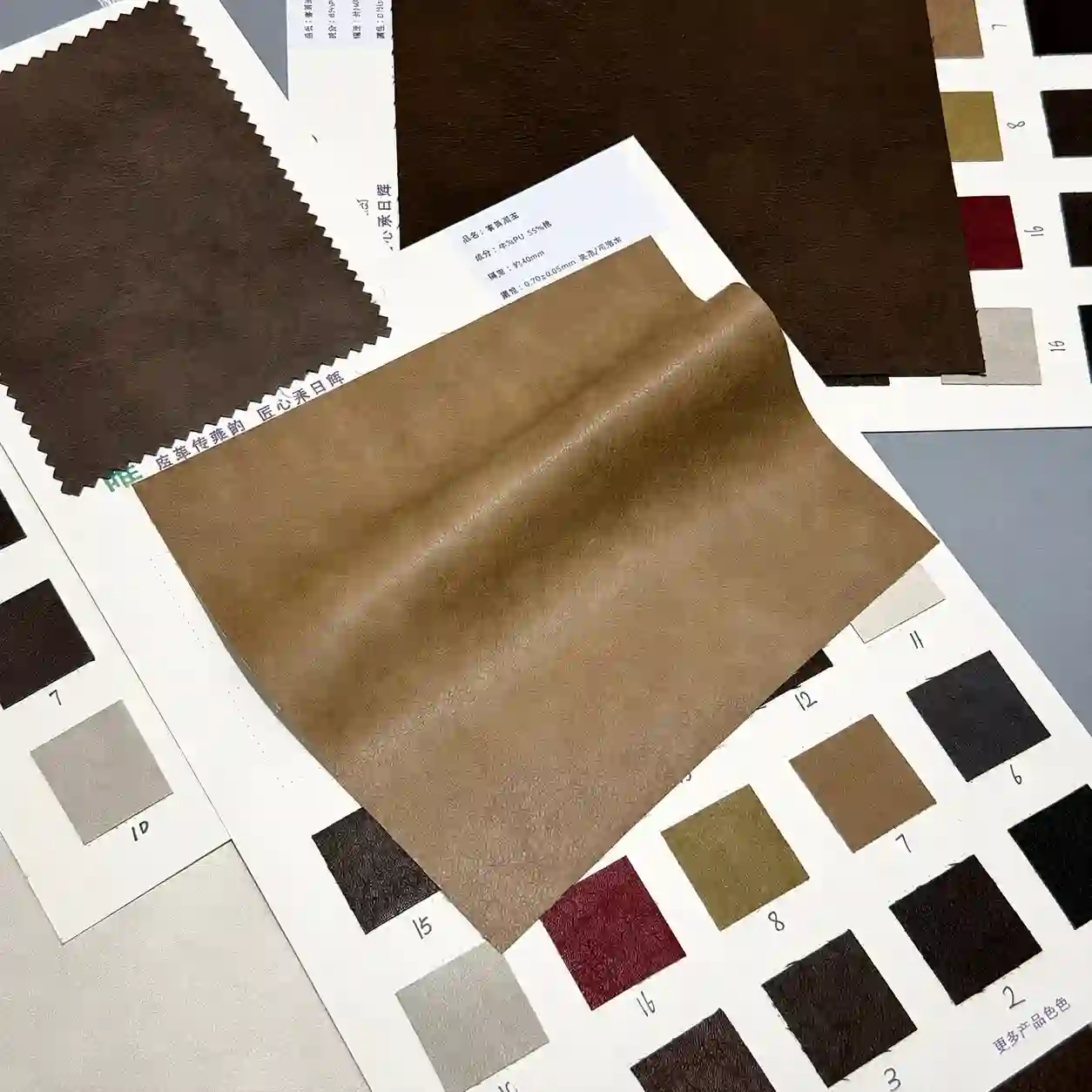
It all converges into one complete plan: design direction, materials, structure, milestones, confirmation checklist — delivered in one pass, with no email ping-pong to fill the gaps.
Send your designFrom pain point and budget to a written plan
No deposit, no sales script — the validation itself is the first deliverable, and your business situation is already written into it.
State the pain point, and the business situation
Design difficulty, budget, target retail price, launch date, positioning — one message, all of it.
Receive the written technical solution
Design direction, materials, structure, milestones, confirmation checklist — commercial constraints already built in, before any sample fee is discussed.
Small samples first, then production
Leather color, hardware, tassels, heel structure — confirmed by small samples before any material is purchased.
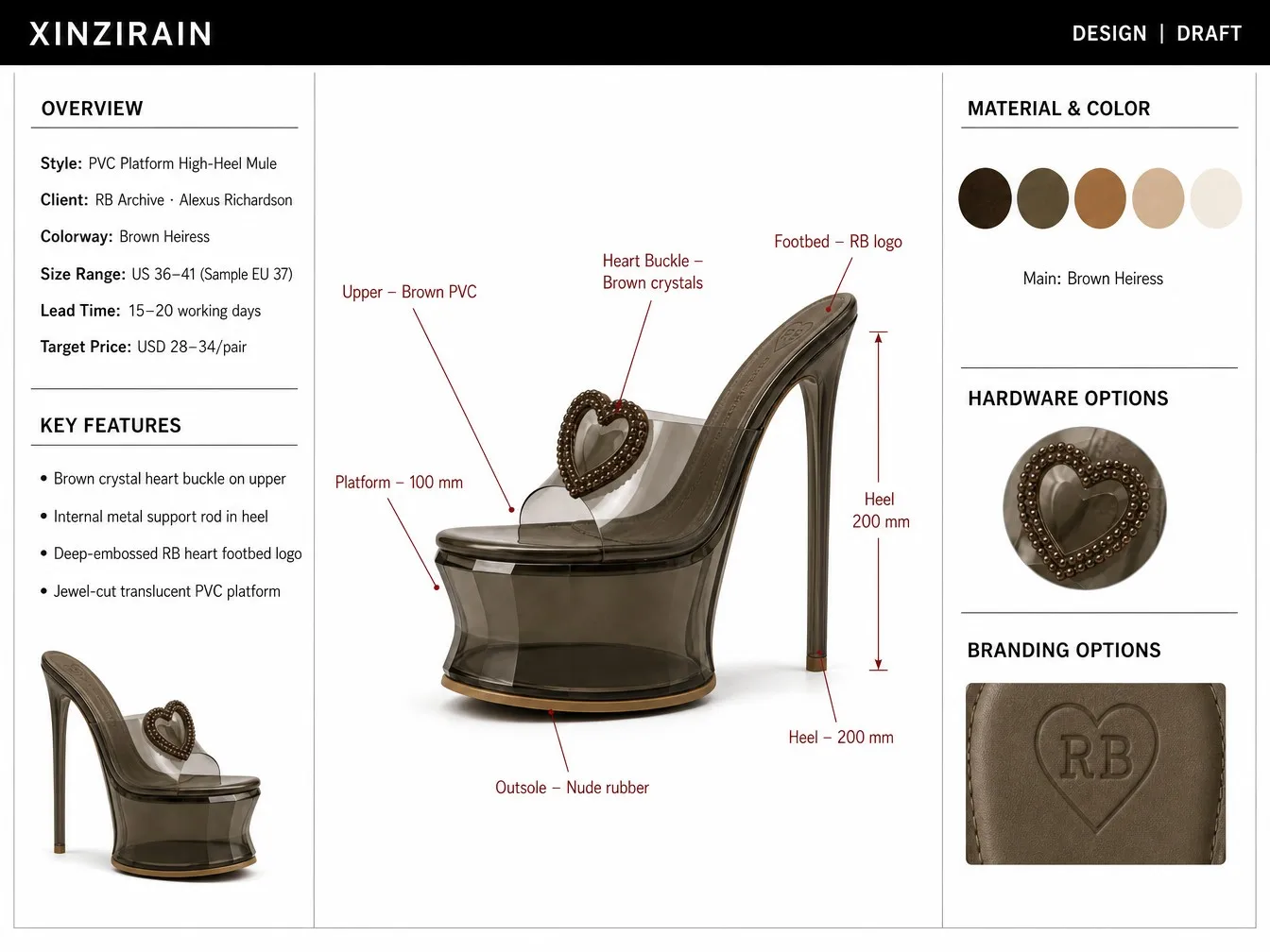
RB Archive · Brown Heiress PVC platform heel mule
A 20 cm heel on a 10 cm front platform is a design statement — and exactly the shape most factories would quietly “simplify”. The pain point: “My design has to be delivered at its full height, and it still has to be wearable.”
Alexus Richardson
Brand: RB Archive · USA
Brown Heiress mule
PVC platform heel mule · crystal heart buckle
First order 300 pairs · 2 colors
US 36–41, sample EU 37 · 15–20 working days
Three challenges carried the real risk — each one has an engineering answer, written into the plan and locked before sampling.
| Challenge | XINZIRAIN's answer |
|---|---|
| Structure — 20 cm heel plus a 10 cm platform; the proportion must be kept and it still has to be wearable | Internal metal support rod + last modification and balance correction + wear testing — the design is kept and stability is solved by engineering |
| Realization — the crystal heart buckle and the deep-embossed RB logo must match the drawing exactly | Positioning jigs + heat-transfer temperature control; the RB heart logo is embossed on the sock lining |
| Cost protection — a 300-pair first order, with the risk cleared before production starts | Sample in 15–20 working days; one color card across the run; mixed-color split, heel and platform height, sizing, transparency and buckle finish all confirmed in writing |
Material composition: PVC upper · PU lining and sock with the RB heart logo embossed · 10 cm PVC platform · 20 cm PVC-acrylic heel with internal metal support rod · skin-tone rubber outsole · brown crystal heart buckle.
The design kept as drawn; both the risk and the budget solved by engineering
The 20 cm heel and 10 cm platform realized as drawn — carried by an internal metal support rod, not by compromise.
Stability and comfort verified through last balance correction plus wear testing; the crystals set with temperature control and positioning jigs.
Mixed-color split, heel and platform height (20 / 10 vs 170 / 70 mm), sizing, transparency and buckle finish — all confirmed in writing before production.
Result: an extreme design reaches the market at full fidelity — wearable, producible, inside budget and faithful to the brand.
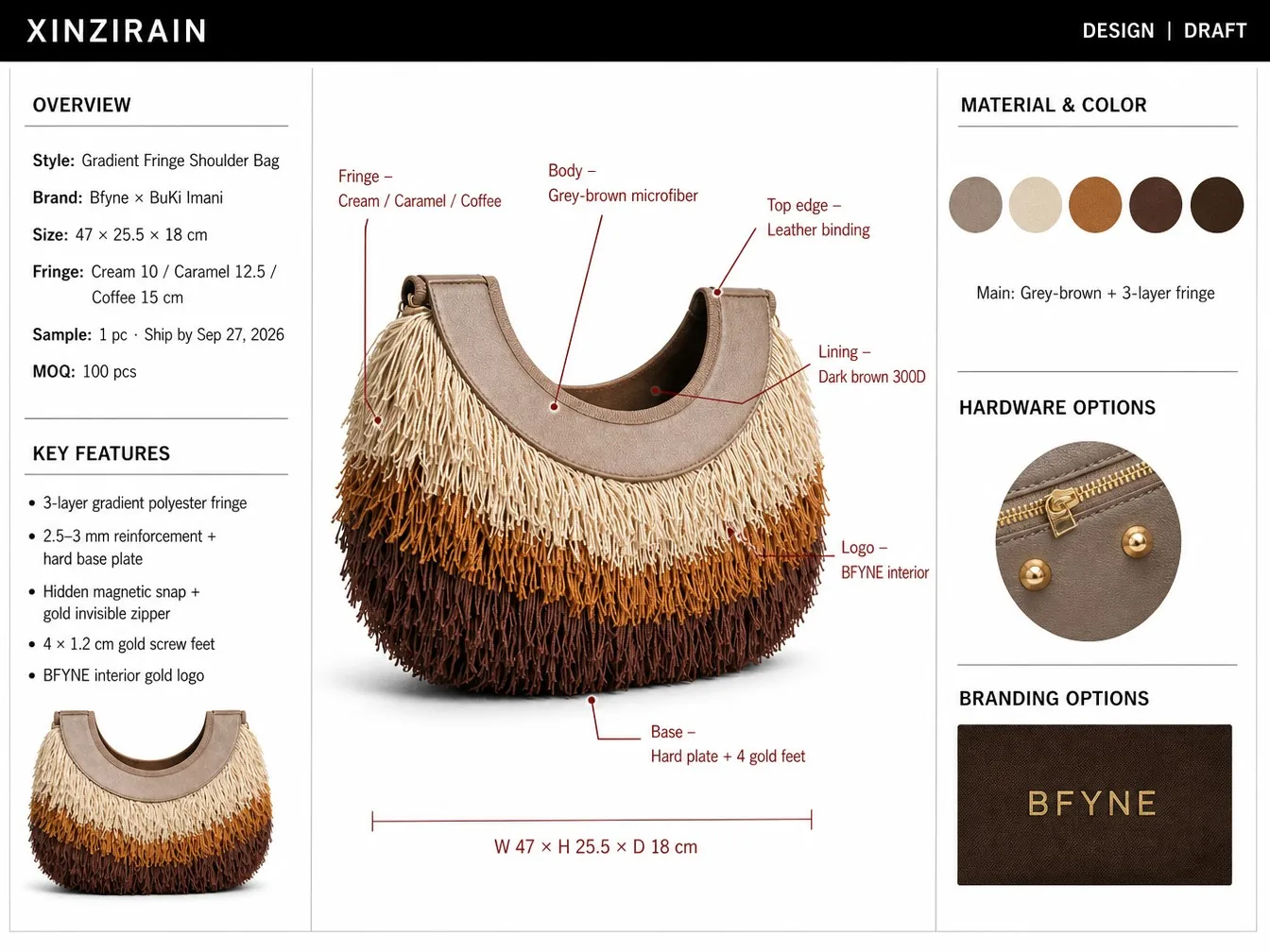
Bfyne × BuKi Imani · Gradient tassel bag
A half-moon boho tassel bag where the silhouette and the three-tier gradient tassels are the design. The pain point: “The body can't collapse, the tassels have to feel premium, and the hardware has to look expensive.”
BuKi Imani
Partner brand: Bfyne · US social channels
Gradient tassel bag
Half-moon boho tassel shoulder bag · 47×25.5×18 cm
Sample first, then bulk
Bulk intent 100 pieces · three tiers at cream 10 / caramel 12.5 / coffee 15 cm
Design draft and references ready
Design realization ahead of sampling
Three challenges carried the real risk — each one has a craft answer, with materials confirmed first and purchased second.
| Challenge | XINZIRAIN's answer |
|---|---|
| Body structure — the half-moon curve must stay clean and the gussets must not collapse inwards | 2.5–3 mm reinforcement board + rigid base board — the silhouette stands up to daily use |
| Gradient tassels — three tiers need premium density and layering | Tassel samples confirm density, loft and the three-tier color run first; fixed to a reinforced base and assembled after the body is formed |
| Hardware and logo — hidden snap, gold feet, gold zipper, BFYNE marking inside | Hardware confirmed by sample before purchase; the logo method (foil, TPU, screen print or woven label) is chosen by the client |
Material composition: light gray-brown microfiber body · cream 10 / caramel 12.5 / coffee 15 cm three-tier tassels · dark brown 300D polyester lining · gold hidden zipper with hidden magnetic snap · 4 gold feet at 1.2 cm · 2.5–3 mm reinforcement board plus rigid base board.
A “simple” bag where every layer is protected before a single material is bought
2.5–3 mm reinforcement plus a rigid base board — the half-moon curve and gussets hold their shape
Tassel density, hardware feel and logo method confirmed by sample — premium feel validated, not promised
Nothing is purchased before it is confirmed — no rework, no wasted budget, and a 100-piece first order stays just as safe
Leather color, tassel samples, tonal lining, hardware and logo method — every open question cleared before cutting
Result: the half-moon silhouette, the gradient tassels and the hardware feel reach the sampling stage exactly as designed — protected by that confirmation checklist.
What the two cases have in common
Footwear uses engineering to keep the proportion; bags use engineering to keep the shape and the detail — underneath it is the same discipline, covering the design and the budget together:
A written plan before any quotation
The Design Realization & Technical Solution comes first — the protection of both the design and the budget starts on paper.
A sample validated before any purchase
Leather color, hardware, tassels, heel structure — confirmed by sample before a single thing is bought.
A confirmation checklist before production
Design, materials, price, timeline — every open question cleared before production starts. It is the cheapest insurance your design and budget can buy.
The next case could be yours
Every case on this page started with one honest sentence about a design that had to survive — along with a budget and a deadline. Tell us your pain point, budget and milestones, and you will receive a free written Design Realization & Technical Solution, before any sample is discussed.
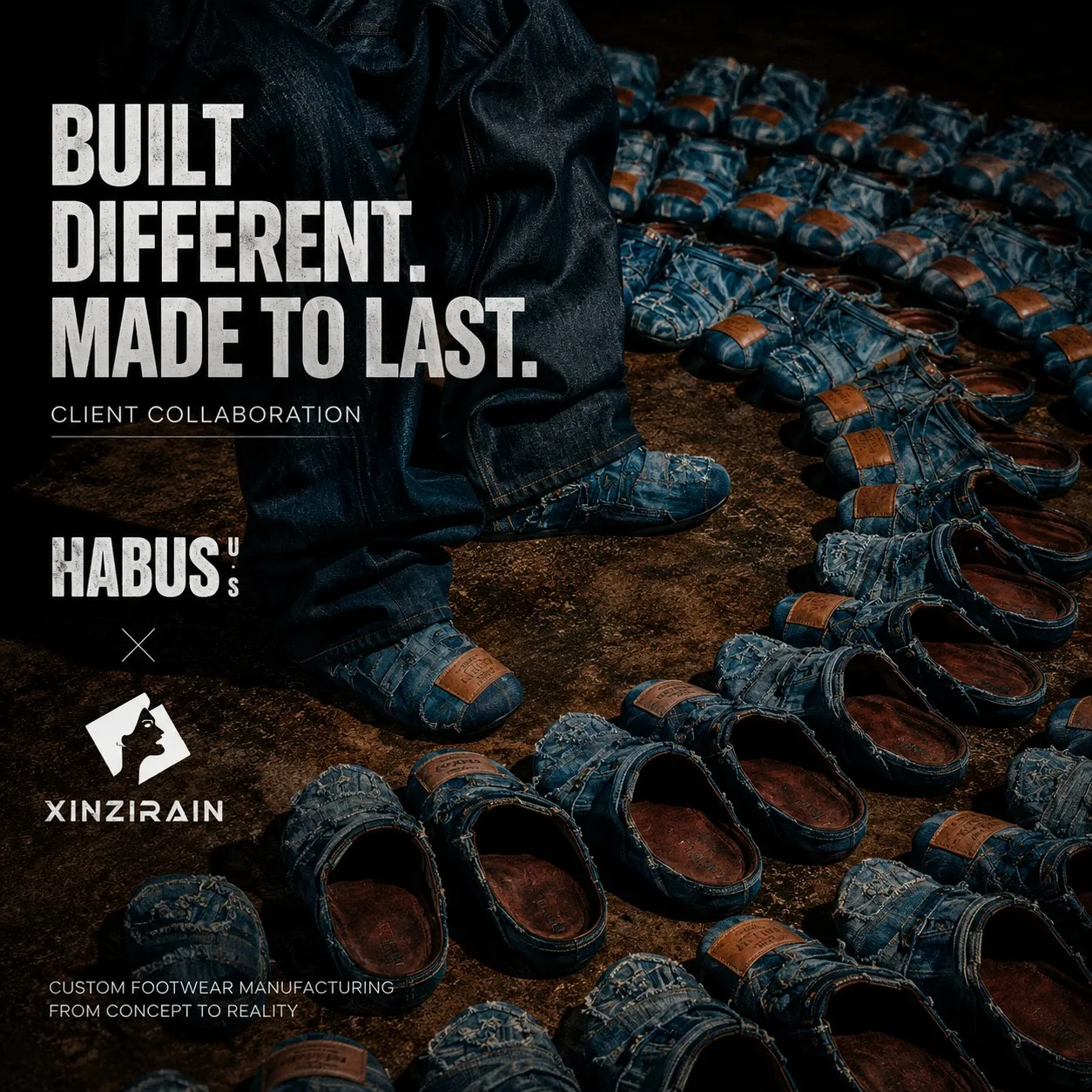
There is no cost to start — tell us the design and the budget, and get a written feasibility assessment first.
Full launch journey: Validate · Sample · Launch · Scale
Validated a first order? See first-order validation →
Planning the next round? Go to reorder & series growth →