
Shoe Factory For Designers - Wholesale Manufacturer Solutions
From first sketch to final prototype, I operate as a Shoe Factory For Designers that truly understands what fashion houses and studios seek. We offer flexible Wholesale terms and act as a reliable Manufacturer, delivering custom uppers, soles, and trims tailored to your collection. You’ll find design-led tooling, rapid prototyping, and batch runs from small orders to mass production, all with consistent fit and quality. I collaborate closely with designers to lock in material choices, colorways, and sustainability goals, while keeping lead times tight and costs predictable. Our in-house facilities allow you to iterate quickly, swap materials, and protect IP during development. If you’re looking for a partner who treats your concept like a product, I’m here to support you every step—from sample to scale. Let me align our capabilities with your brand’s brief and open wholesale pricing that fits your workshop or atelier.
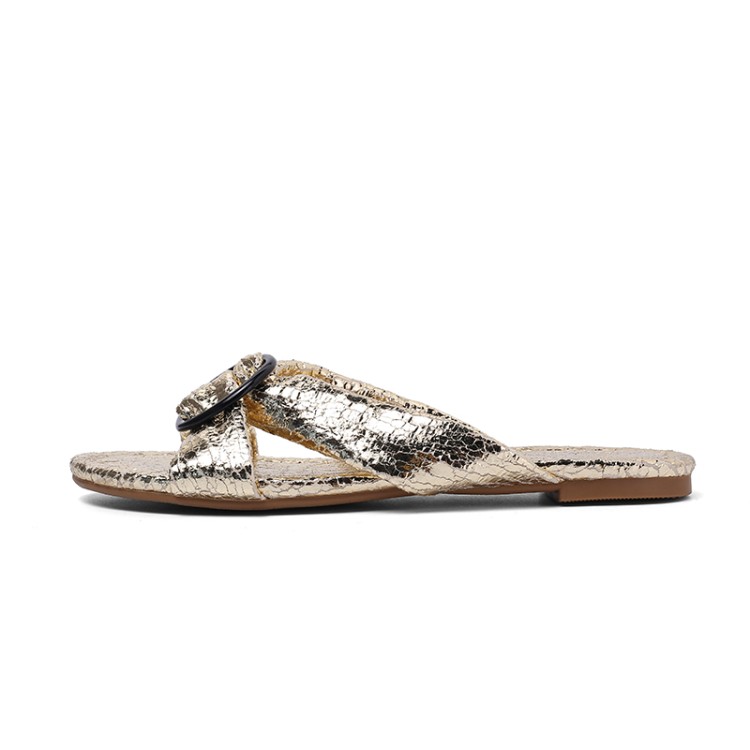


Shoe Factory For Designers Sets the Industry Standard Your End-to-End Solution
Global designers deserve a partner that turns bold concepts into wearable reality. From initial design consultation to technical development, we blend fashion insight with manufacturing discipline. Our end-to-end process covers material selection, prototypes, CAD/3D samples, and color and fit testing, ensuring every concept translates into a consistent product. We offer sustainable options, traceable supply chains, and compliance with international standards to meet evolving demands while protecting IP and design intent. With scalable production and flexible lead times, we accommodate capsule runs and large launches alike. Transparent pricing, project tracking, and rigorous QA networks reduce risk across borders, while optimized logistics and packaging simplify global distribution. From trend-driven silhouettes to technical footwear, we translate design intent into manufacturable reality, shortening time to market and setting a higher standard for designer footwear worldwide. Partnering with us delivers an integrated ecosystem that empowers creative teams to innovate confidently.
| Product Category | Typical Design Stage | Primary Materials (composition) | Typical Batch Size (pairs) | Typical Production Lead Time | Common Manufacturing Techniques | Key Quality & Compliance | Avg Carbon Footprint (kg CO2e / pair) | Recyclability Rate (%) | Recommended Use Case |
|---|---|---|---|---|---|---|---|---|---|
| Athletic Running | Concept → Prototype → Tech Pack → Pre-production | Engineered knit upper (50% recycled polyester, 30% nylon), EVA midsole, rubber outsole | 1,000–5,000 | 8–12 weeks | Strobel lasting, injection-molded midsole, cemented outsole | ISO 9001; REACH compliant; performance traction tests | 8 | 35 | Road running, training |
| Casual Leather Loafers | Design → Leather selection → Lasting → Finishing | Full-grain leather upper, cork footbed, rubber heel insert | 500–2,000 | 10–14 weeks | Hand lasting, Goodyear-style welt (traditional stitching) | ISO 9001; leather traceability standards; REACH | 12 | 50 | Business casual, office wear |
| Dress Formal Oxfords | Sketch → Patterning → Hand finishing → Quality inspection | Full-grain leather upper & lining, leather or leather+rubber sole | 300–1,500 | 12–16 weeks | Blake stitch, hand-welt operations, detailed finishing | ISO 9001; durability & sole adhesion testing | 14 | 40 | Formal events, corporate wear |
| Outdoor Hiking Boots | Materials validation → Prototype → Field testing → Production | Nubuck leather, waterproof membrane (e.g., PTFE/PU), rubber lug outsole | 800–2,500 | 10–14 weeks | Welted or cemented, seam sealing, injection molded midsoles | ISO 9001; EN ISO 20344 (abrasion & slip resistance) | 16 | 30 | Hiking, trekking, outdoor use |
| Slip-On Casual | Rapid prototyping → Pattern grading → Final run | Organic cotton/canvas upper, EVA sole | 2,000–6,000 | 6–10 weeks | Vulcanized or cemented construction | ISO 9001; REACH; textile safety checks | 6 | 60 | Everyday casual, travel |
| Kids Play Shoes | Concept → Safety testing → Child-wear trials | Mesh textile upper (70% recycled polyester), EVA foam midsole | 2,000–8,000 | 6–8 weeks | Injection molded soles, cemented uppers, reinforced toe caps | ISO 9001; EN 71 toy safety / child product compliance | 7 | 45 | Play, school activities |
| Sustainable Vegan Line | Material sourcing → Verification → Low-impact production | Bio-based PU & recycled rubber, recycled polyester linings | 500–3,000 | 8–12 weeks | Heat-bonding, cemented assembly, injection molding | ISO 14001 (environmental), REACH; material declarations | 9 | 70 | Eco-conscious lifestyle, urban wear |
| Performance Basketball | Athlete testing → Impact tuning → Finalization | Engineered knit upper, TPU shank, responsive PU/EVA midsole, rubber cupsole | 800–2,500 | 10–14 weeks | Strobel lasting, cupsole molding, thermoplastic overlays | ISO 9001; sport performance testing (impact, traction) | 11 | 25 | Indoor/outdoor court performance |
Related Products


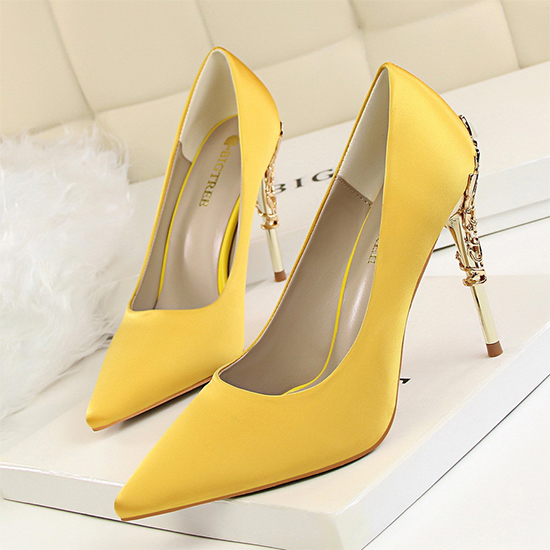
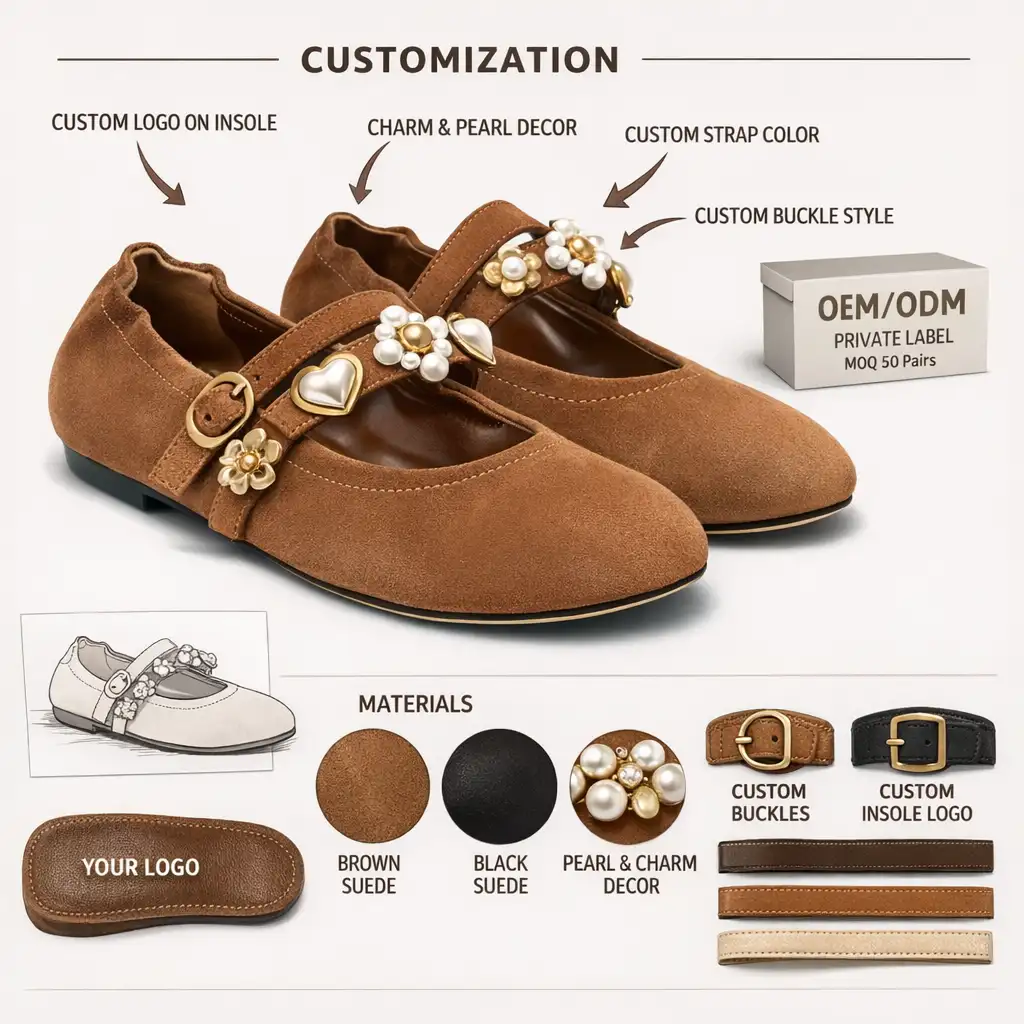
Shoe Factory For Designers For the Current Year Supplies the World\u2019s Top Brands
Top Selling Products




- Related Blog
- Reviews
- Reviews
