
Wholesale Leather Bag Manufacturer Singapore
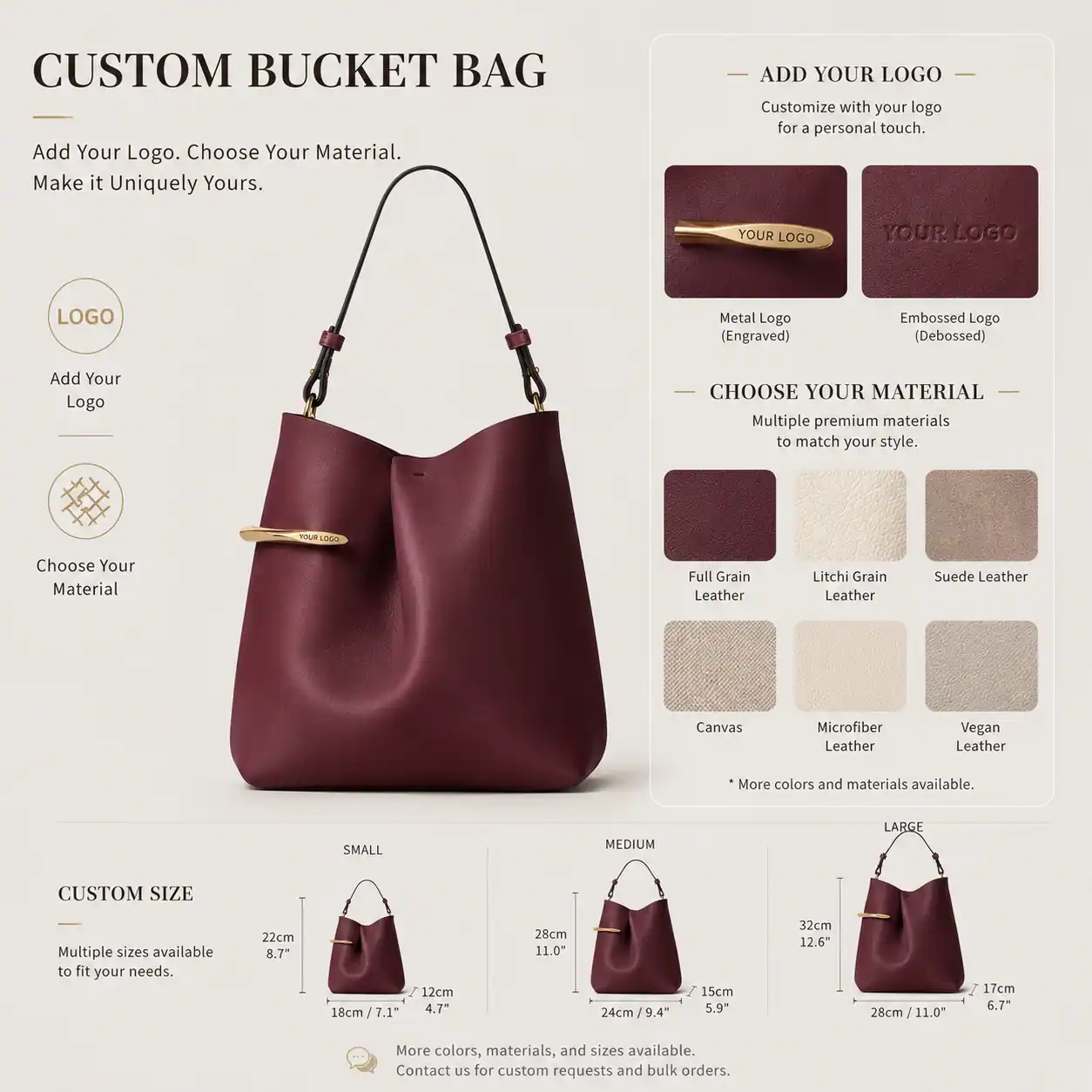
As a Leather Bag Manufacturer Singapore, I craft durable, stylish bags for wholesale partners who value quality and reliability. Our collection blends full-grain leather, meticulous stitching, and bold hardware to withstand daily wear in busy offices and travel. I offer flexible production options for Wholesale orders, from small runs to long-term contracts, with quick lead times and clear QC. You will appreciate transparent pricing, MOQs tailored to demand, and customization possibilities—logo embossing, colorways, lining, and strap hardware. Our factory practices sustainable tanning and ethical sourcing, with traceable supply chain so you can reassure your customers. Shipping is streamlined to Asia and beyond, with samples available on request. If you're seeking a trusted Manufacturer to scale your private label or distribute under your brand, I’m ready to collaborate. Let’s discuss your specs, volumes, and budgeting; I’ll propose a tailored solution that fits your market.


Leather Bag Manufacturer Singapore Stands Out Your Trusted OEM Partner
Singapore is a strategic hub for global procurement, offering logistics and IP protection. A Chengdu‑based producer with decades in footwear and fashion accessories now extends its end‑to‑end capabilities to leather bags, turning concepts into samples and scalable production with consistent quality. This makes design-to-market easier, with Singapore as the gateway to global shipments. From pattern making to leather selection, hardware sourcing, sewing, and packaging, the partner provides a streamlined workflow. A mature supply chain in China enables rapid prototyping, flexible runs, and transparent lead times, complemented by rigorous QC and pre-shipment checks. ODM and private-label options help teams bring distinctive styles to market faster. Global buyers gain reliability, cost efficiency, and risk mitigation through collaborative development, flexible MOQs, and clear communication. With ethical production and continuous improvement at the core, this partnership supports sustainable growth. If you seek a responsive OEM collaborator for leather bags, consider a long‑term value partner.
| Attribute | Details |
|---|---|
| Primary Materials | Full-grain leather, top-grain leather, vegetable‑tanned leather, nubuck, corrected-grain leather, and high-quality PU/synthetic leather. Linings commonly: recycled PET fabric, cotton canvas, or microfiber suede. |
| Common Hardware & Components | Brass and stainless steel (304) buckles, nickel-free plating options, zinc alloy fittings, YKK zippers, metal rivets, and leather or reinforced polyester webbing straps. |
| Manufacturing Locations (regional) | Design and small-batch assembly in Singapore; cutting and tanning often handled in nearby Malaysia; bulk stitching and assembly in Vietnam and selected partners in southern China for higher-volume runs. |
| Monthly Production Capacity (typical) | Modular capacity: 5,000–20,000 finished units/month depending on model complexity and batch scheduling. Capacity scales with lead time and factory allocation. |
| Minimum Order Quantity (MOQ) | Typical MOQ for leather bag styles: 200–500 units per style/colour. Prototype sample orders available: 1–5 pieces (sample fee may apply). |
| Lead Times | Prototype: 2–3 weeks (patterning, sample build). Bulk production: 6–10 weeks from PO approval, depending on complexity, hardware lead times, and order size. |
| Quality Control & Testing | In-line and final inspection protocols; common tests include seam/tensile strength, abrasion (Martindale, ISO 12947), color fastness (ISO 105), rub/crocking tests (ISO 105‑X12), and salt spray for plated hardware (ASTM B117). Typical final defect rate: <2% (industry target <1.5% for premium lines). |
| Certifications & Compliance | Factory partners typically maintain ISO 9001 (quality), ISO 14001 (environmental) and third‑party social audits such as BSCI/SMETA. Materials and hardware are checked for REACH compliance and restricted substances per common export requirements. |
| Customization Options | Full OEM customization: pattern development, size grading, bespoke linings, custom hardware plating, embossing/debossing, foil stamping, laser engraving, internal pockets, RFID-blocking layers, and branded packaging solutions (no branding names shown here). |
| Sustainability Practices | Use of vegetable‑tanned leather for selected runs (~20–40% of material mix by project), recycled PET linings (commonly 15–30% of liners), water-recycling in tannery processes, and responsible waste management; suppliers able to provide material origin documentation on request. |
| Typical Sample & Revision Cycle | Initial sample: 10–14 days. Revision cycles: 7–10 days per revision depending on adjustments (pattern, hardware change, or material swap). |
| Packaging & Shipping Options | Recyclable kraft boxes, cotton dust bags, recycled-paper hangtags; carton packing suited for sea or air freight with standard export documentation and interior protective packaging for leather goods. |
| Warranty & After‑Sales | Typical limited manufacturing warranty: 12 months against workmanship defects. Repair or replacement policies handled on a case-by-case basis with photographic evidence and QC review. |
| Typical Export Regions | Regular exports to Southeast Asia, Europe, North America, Australia and selected Middle East markets, with packaging and compliance adapted to regional import requirements. |
| Notes on Design Collaboration | Design services include technical sketches, digital pattern files (DXF/PDF), graded size sets, and tech packs. Collaborative prototyping with client feedback loops is standard to align fit and finish prior to bulk production. |
Related Products



Leather Bag Manufacturer Singapore in 2025 Global Reach
Top Selling Products



- Related Blog
- Reviews
- Reviews
