
Wholesale Women's Leather Flats Manufacturer
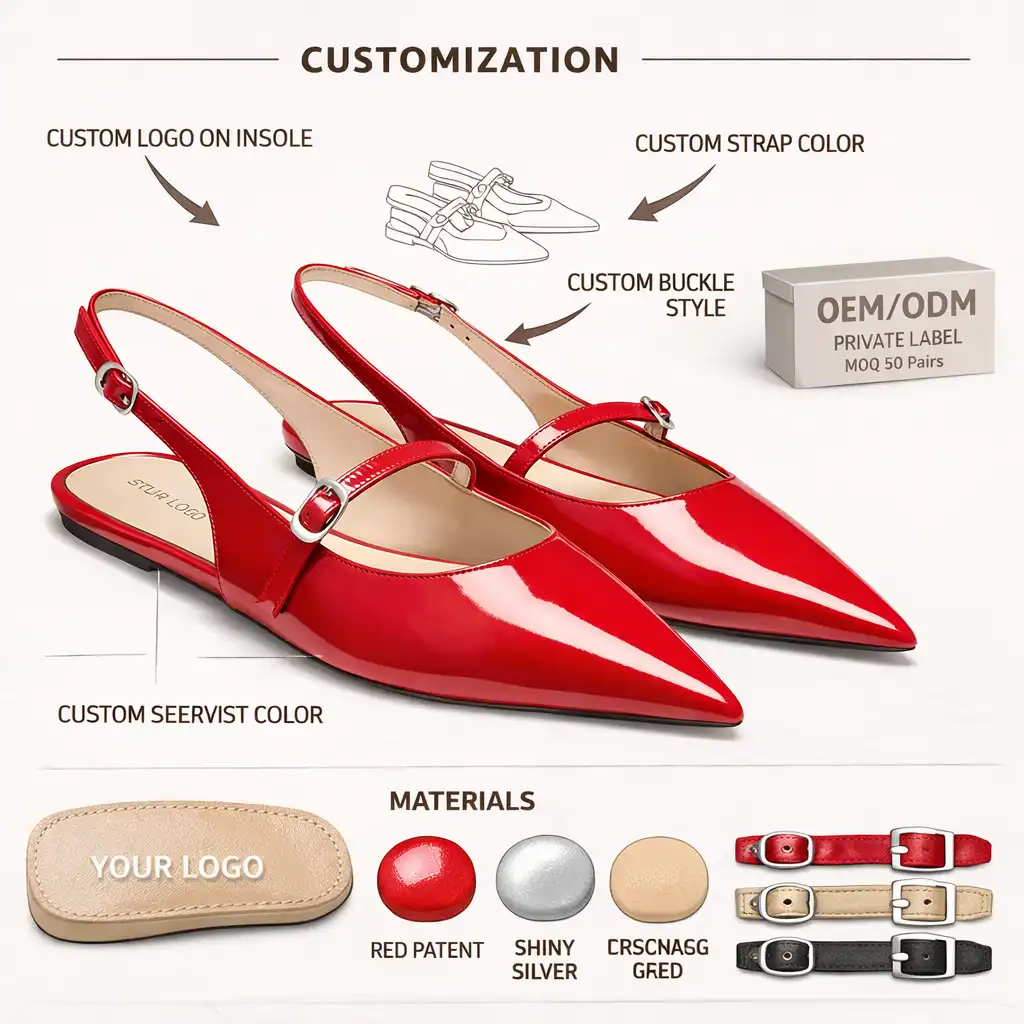
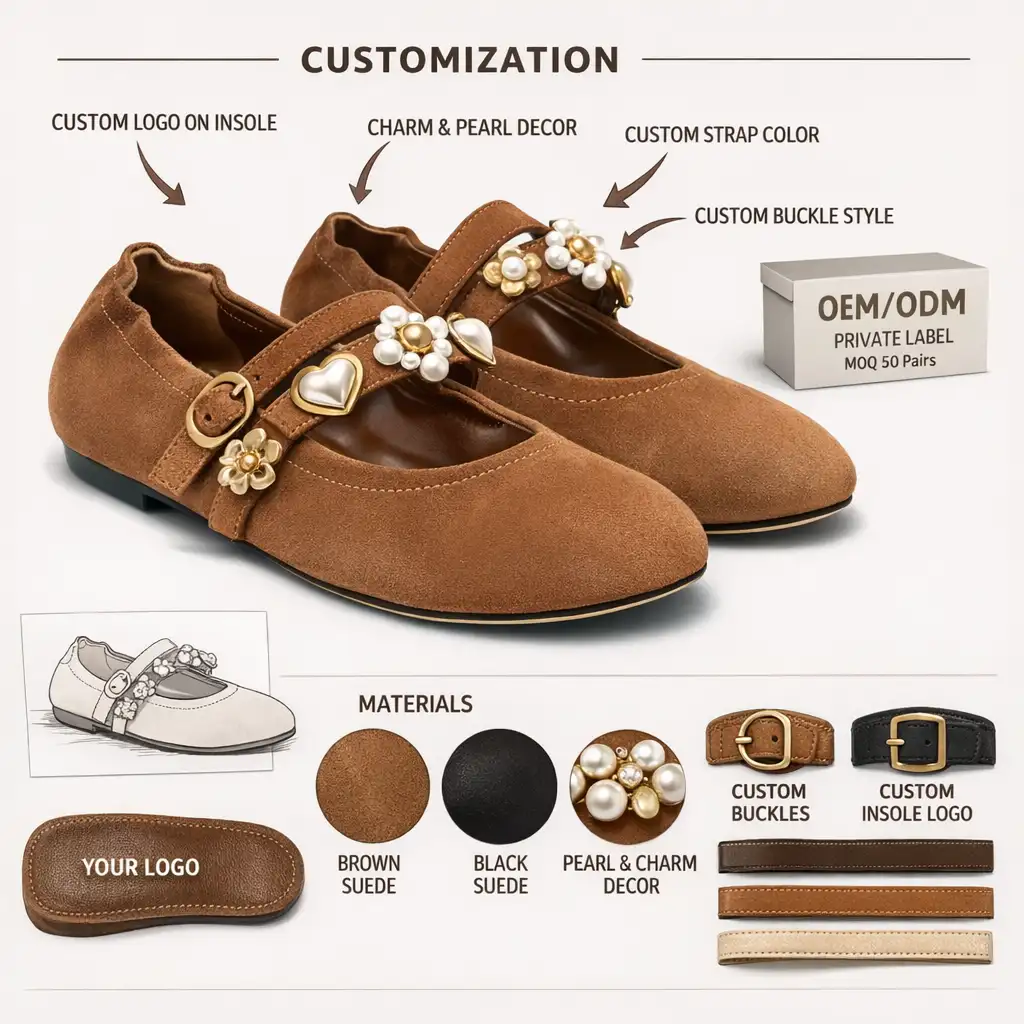
From the ground up, I craft women's leather flats that blend timeless style with durable comfort. As a Manufacturer focused on Wholesale partnerships, I offer flexible MOQs, competitive pricing, and customization—colorways, finishes, even private labeling for your brand. Each pair uses full-grain or top-grain leather, a cushioned insole, and a flexible outsole to keep feet happy through long days of work or travel. We handle our supply chain directly, so lead times are predictable, and control over quality is high. I can help you target boutique shops, department stores, and online retailers with consistent sizing and packaging. If you need sample programs, bulk packaging, or mixed styles for catalogs, I’ve got you. Let’s talk about your demand, seasonal drops, and regional market needs. With my women's leather flats, your wholesale customers will get comfort, craft, and clear value—backed by reliable manufacturing.
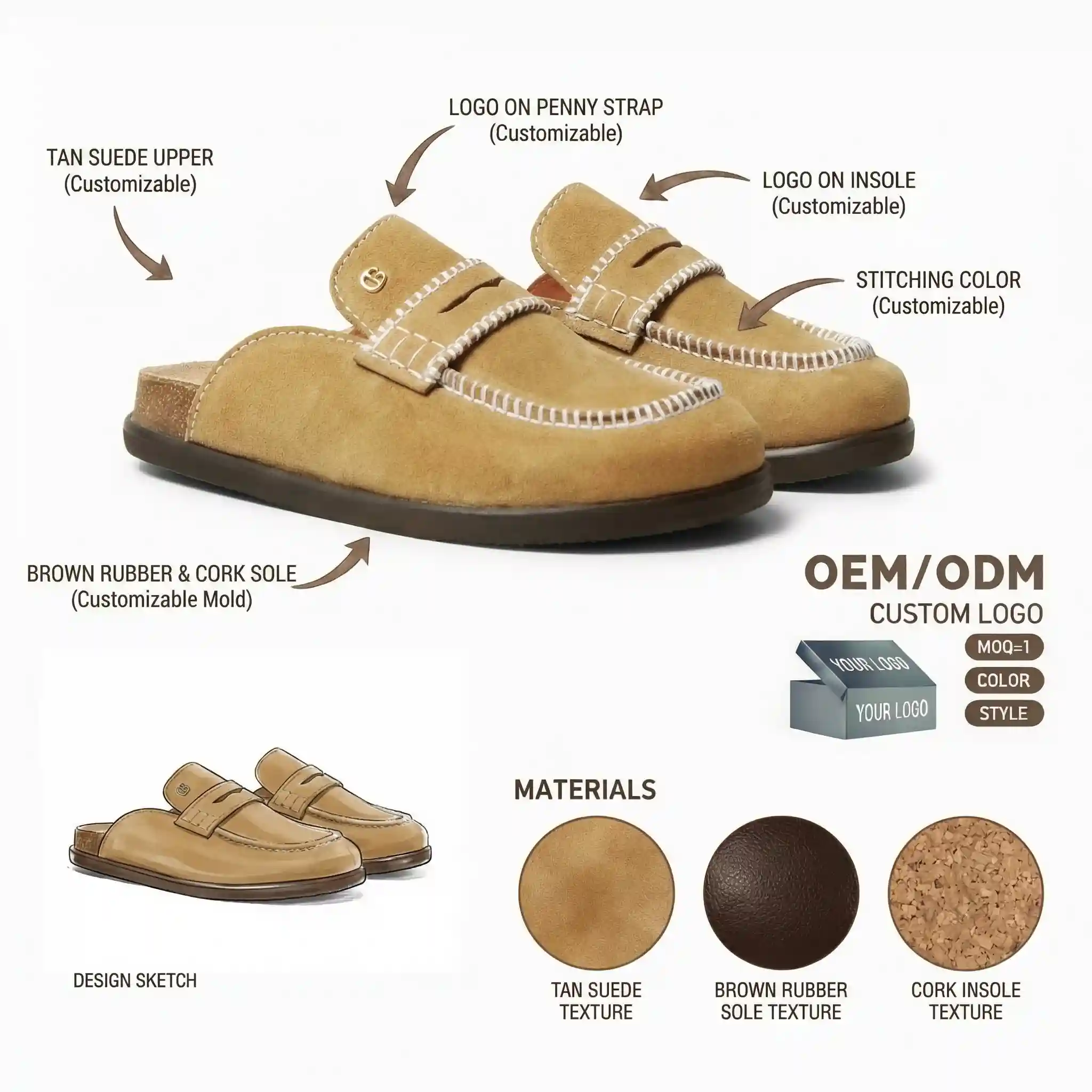

women's leather flats Supplier Market Leader
Global buyers seek a partner who can deliver stylish, durable women's leather flats at scale. A true market leader combines responsible material sourcing, ergonomic design, and consistent quality. From choosing premium full-grain leathers and eco-friendly finishes to precise stitching and comfortable insoles, the focus is on longevity and everyday wear. Rapid prototyping, flexible customization, and a transparent sample cycle shorten time-to-market without compromising fit or finish. In short, a leading supplier aligns design excellence with production discipline to transform trends into reliable products. Beyond product, reliability matters. Flexible MOQs, private label options, multi-warehouse logistics, and on-time delivery support global growth. A top partner maintains rigorous QA—from incoming material checks to inline QC and third-party testing—plus compliance with REACH, CPSIA, and social standards. End-to-end services include branding, packaging, and after-sales support, all tracked through digital traceability. For global purchasers, this blend of craft, responsibility, and responsive service creates a scalable platform to bring compelling women’s flats to markets worldwide.
| Supplier_ID | Country | City | Lead Time (days) | MOQ (pairs) | On-Time Delivery (%) | Defect Rate (%) | Leather Type | Leather Grade | Lining | US Size Range | Color Options | Annual Capacity (pairs/year) | Certifications | Sustainability Score |
|---|---|---|---|---|---|---|---|---|---|---|---|---|---|---|
| 1001 | Italy | Milan | 28 | 400 | 97 | 0.8 | Full-Grain Leather | A | Leather | 5-12 | Black, Brown, Nude, Tan | 350000 | ISO 9001; BSCI | 82 |
| 1002 | Vietnam | Ho Chi Minh City | 35 | 500 | 92 | 1.2 | Semi-Aniline Leather | A- | Synthetic | 6-11 | Black, Tan, Navy, White | 420000 | ISO 9001; SEDEX | 88 |
| 1003 | China | Guangzhou | 40 | 1000 | 95 | 1.0 | Full-Grain Leather | A | Leather | 4-10 | Black, Brown, Tan | 560000 | ISO 9001; BSCI | 79 |
| 1004 | Portugal | Porto | 25 | 300 | 98 | 0.6 | Top-Grain Leather | A | Leather | 5-11 | Black, Navy, Olive | 420000 | ISO 9001; OEKO-TEX | 85 |
| 1005 | India | Mumbai | 38 | 700 | 90 | 1.5 | Full-Grain Leather | B | Leather | 6-9 | Black, Brown, Red | 310000 | ISO 9001; BSCI | 74 |
| 1006 | Turkey | Izmir | 32 | 450 | 93 | 1.1 | Nubuck Leather | A- | Microfiber | 5-12 | Black, Sand, Grey | 380000 | ISO 9001; SEDEX | 80 |
Related Products


women's leather flats Factory Exceeds Industry Benchmarks
Top Selling Products


- Related Blog
- Reviews
- Reviews
