
Leather Business Bag Manufacturers - Wholesale & Manufacturer
As Leather Business Bag Manufacturers, we design and produce premium totes, briefcases, and messenger bags for wholesale buyers and OEM partners. We focus on full-grain leather, brass hardware, and reinforced stitching to hold up under daily professional use. Our MOQ is flexible for small distributors and large retailers alike, with scalable production to match your growth. We offer custom branding, color matching, engraving, and private labeling—alongside transparent wholesale pricing and dependable lead times. From pattern to sample, mass production, QA, and packaging, we manage every step as a Manufacturer so you can trust consistency and speed. You’ll get a dedicated account manager, clear catalogs, and flexible terms to simplify ordering. Our factory upholds strict quality control, sustainability, and compliance standards. If you’re seeking a reliable partner for wholesale Leather Business Bag Manufacturers, send your specs—ODM/OEM collaborations and long-term distribution agreements are welcome.


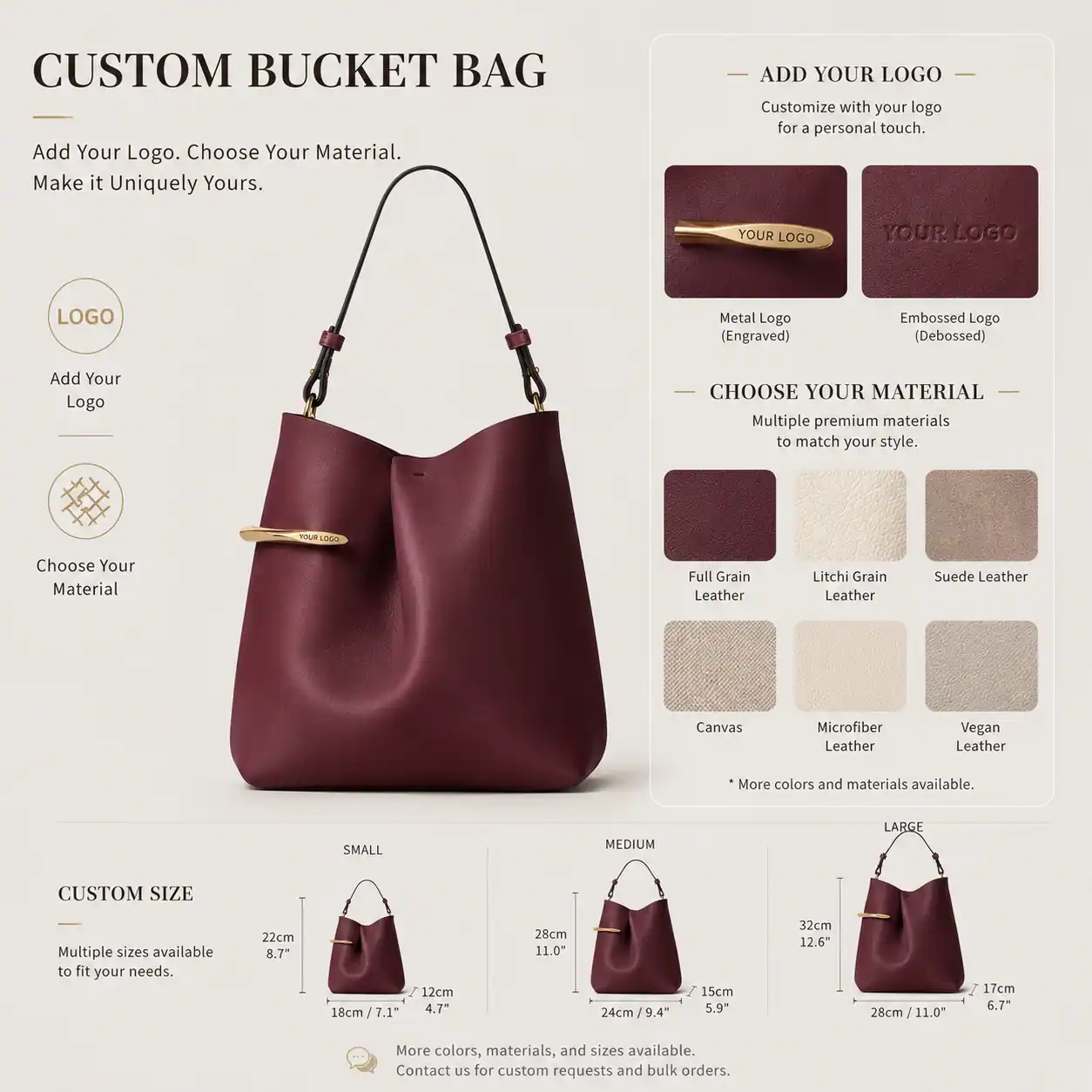

Leather Business Bag Manufacturers Sets the Industry Standard From Concept to Delivery
From concept to delivery, a true leather business bag manufacturer turns an idea into a durable professional accessory built for global travel. By aligning design with real end-user needs, we translate sketches into scalable prototypes, select full-grain leathers with responsible tanning, and test durability, water resistance, and colorfastness. A standardized development and QA workflow ensures every sample mirrors the factory floor while modular hardware, organized interiors, and ergonomic silhouettes meet daily business routines. To global procurement teams, partnering with a capable supplier means more than just bags. As an Asia-based producer, we offer single-source accountability across design, tooling, material sourcing, production, quality control, finishing, packaging, and logistics. With transparent lead times, flexible MOQs, and scalable production capacity, a trusted partner can reduce risk and speed time-to-market. Ethical sourcing, traceability, and sustainable packaging are woven into the journey, ensuring a reliable supply chain from factory to frontline.
| Dimension | Sub-dimension | Typical Value | Unit | Industry Benchmark | Notes / Certifications |
|---|---|---|---|---|---|
| Delivery Timeline | Overall Lead Time (Concept to Delivery) | 28-70 | days | Standard range for mid-market bag production; shorter for standard designs, longer for customization | Note: Customization adds 14-21 days; ISO 9001 recommended |
| Materials | Leather Type | Full-grain | type | Most premium bags use full-grain or top-grain leather | Consider chrome-free or vegetable-tanned options |
| Materials | Material Sourcing Lead Time | 7-14 | days | Typical supplier lead time for quality leather from established tanneries | Secured supply reduces variability |
| Product Development | Pattern Making & Prototyping | 5-12 | days | Standard pattern creation to proto and sample approval | Higher complexity may extend |
| Manufacturing | Cutting Tolerance | 0.5-1.0 | mm | High-precision cutting is essential for consistent assembly | Utilizes CNC cutters; manual cutting in smaller batches |
| Manufacturing | Stitching Density | 6-8 | SPI | Standard for durable construction in bag corners and seams | Lockstitch or reinforced saddle stitches common |
| Finishing & QA | QA Pass Rate | 98-99 | % | Very high pass rate in reputable factories with multi-point checks | Includes cosmetic checks, seam integrity, hardware test |
| Sustainability | Certifications | ISO 14001; SA8000 | - | Standard environmental and social compliance for manufacturing | Optional: Leather Working Group (LWG) facility rating |
| Packaging | Packaging Materials | 100% recyclable | - | Common practice to reduce packaging waste | |
| Automation & Efficiency | Automation Level | 25-40 | % | Partial automation in cutting, stitching, and finishing | Ongoing modernization improves yield |
| Quality | Defect Rate | 0.3-1.5 | % | Typical defect rate per batch for mid-range operations | Target zero defects; continuous improvement programs |
| Capacity | Monthly Production Capacity | 2,000-6,000 | units | Depends on factory size; mid-market facilities fall here | Higher capacity requires automation and scalable sourcing |
| Delivery | Customization Lead Time | 14-21 | days | For typical design tweaks after approval | Complex bespoke orders can extend |
Related Products


Leather Business Bag Manufacturers Exceeds Industry Benchmarks Where Service Meets Innovation
Top Selling Products



- Related Blog
- Reviews
- Reviews
