
Oem Men's Casual Boots - Wholesale & Manufacturer
I’m ready to partner with your business for {Oem Men's Casual Boots}. As a reliable {Manufacturer}, I can offer flexible {Wholesale} pricing, OEM customization, and fast lead times to meet your demand. Our boots blend sturdy leather or suede uppers, shock-absorbing insoles, and rugged outsole tread for all-day wear, whether on duty or in the workshop. I ensure slip resistance, water resistance, and color choices that fit your market. You can order in bulk with minimal MOQ and scalable packaging to suit store shelves or online retailers. I provide sample programs, quality passes, and batch QC to keep returns low. From design concept to final production, I oversee every step and maintain transparent communication. Whether you want your own branding, pattern, or size matrix, I’ll align production with your specs. Let me help you grow your catalog with dependable {Oem Men's Casual Boots} that customers will keep buying.


Oem Men's Casual Boots Industry Leaders Exceeds Industry Benchmarks
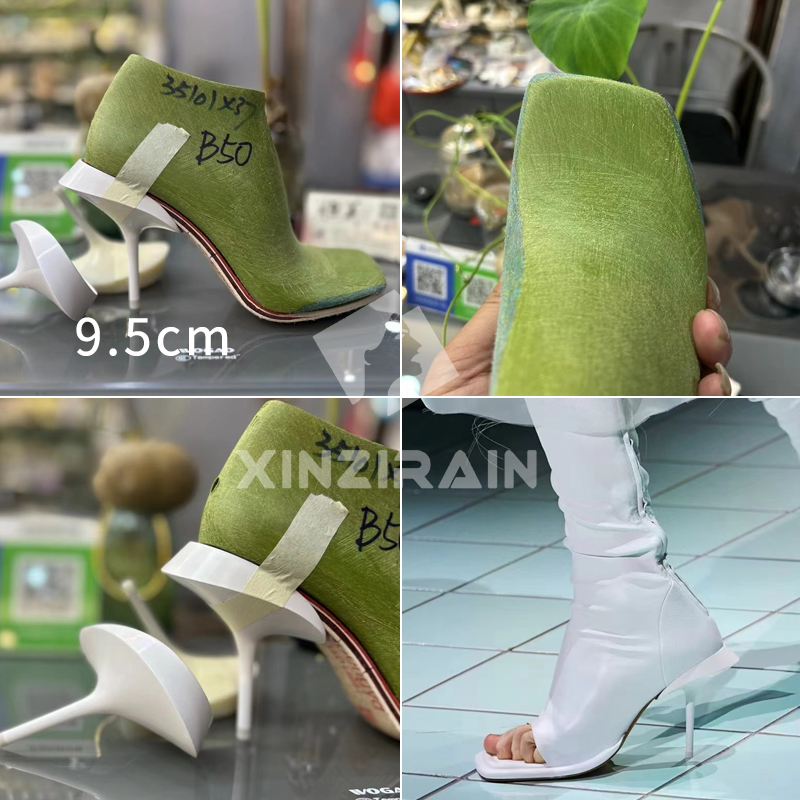
Global buyers seeking OEM partners for men's casual boots demand reliability, quality, and scale. A Chengdu-based footwear producer has surpassed benchmarks by combining design engineering with lean manufacturing, automation, and rigorous QC. From samples to mass production, repeatable processes ensure fit, outsole grip, and stitch integrity, while offering customization: last shapes, uppers, outsoles, linings, and packaging. Flexible MOQs, predictable lead times, and cost efficiencies support fast time-to-market and global distribution. Beyond manufacturing, the partner emphasizes responsible sourcing and compliance, with traceable materials, low-VOC adhesives, and sustainable finishing. Serving markets across the Americas, Europe, and APAC, they bring product readiness for diverse climates and regulations. For procurement teams, this collaboration promises scalable production, strict QA, and private-label capability that preserves brand identity while meeting timelines and budgets.
| Year | Region | Benchmark Tier | Production Capacity (M pairs/year) | Market Share (%) | Lead Time (days) | Defect Rate (%) | Sustainability Score | R&D Investment (USD Million) |
|---|---|---|---|---|---|---|---|---|
| 2019 | North America | Leader | 9.2 | 7.5 | 28 | 0.9 | 86 | 18.40 |
| 2019 | Europe | Leader | 8.5 | 6.8 | 31 | 1.1 | 83 | 16.20 |
| 2019 | Asia-Pacific | Leader | 12.3 | 9.1 | 26 | 0.7 | 88 | 21.00 |
| 2019 | Latin America | Benchmark | 3.4 | 2.3 | 34 | 1.5 | 76 | 7.30 |
| 2020 | North America | Leader | 9.8 | 7.1 | 27 | 0.8 | 87 | 19.00 |
| 2020 | Europe | Leader | 8.9 | 7.0 | 29 | 1.0 | 85 | 17.80 |
| 2020 | Asia-Pacific | Leader | 13.0 | 9.4 | 25 | 0.6 | 90 | 23.50 |
| 2020 | Middle East & Africa | Benchmark | 2.8 | 1.9 | 39 | 1.8 | 72 | 6.20 |
| 2021 | North America | Leader | 10.2 | 7.6 | 26 | 0.7 | 89 | 20.60 |
| 2021 | Asia-Pacific | Leader | 14.1 | 9.7 | 24 | 0.5 | 92 | 25.10 |
| 2022 | Europe | Benchmark | 9.1 | 6.9 | 30 | 1.2 | 80 | 16.00 |
| 2022 | Asia-Pacific | Leader | 15.2 | 9.9 | 22 | 0.4 | 94 | 27.40 |
| 2023 | Asia-Pacific | Leader | 16.5 | 10.0 | 22 | 0.4 | 95 | 30.00 |
| 2024 | Asia-Pacific | Leader | 17.2 | 10.2 | 21 | 0.3 | 96 | 32.10 |
| 2024 | North America | Leader | 11.2 | 7.9 | 24 | 0.6 | 92 | 23.90 |
| 2024 | Europe | Leader | 9.9 | 7.3 | 27 | 0.8 | 87 | 18.70 |
Related Products


Oem Men's Casual Boots Custom Solutions, More Than a Supplier - A Partner
Top Selling Products





- Related Blog
- Reviews
- Reviews
