Private label shoes and bags factory - XINGZIRAIN

Custom Boots Suppliers - Wholesale Manufacturer Solutions

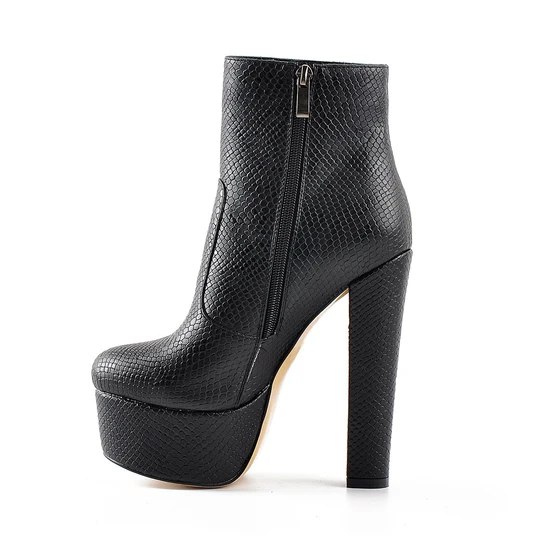
We’re your go-to Custom Boots Suppliers for wholesale orders, turning bold designs into durable, ready-to-ship footwear. As a dependable Manufacturer, we handle every step—from prototyping to final stitching—so you can sell with confidence. I work with retailers, safety distributors, and fashion houses who need consistent quality in large quantities. You tell us your material, color, style, and sizing, and we deliver samples fast and scalable production with competitive pricing. Our factory uses trusted leathers, heat-pressed logos, and reinforced soles to withstand daily wear. We offer private labeling, packaging customization, and flexible MOQ to fit your inventory plan. With transparent lead times, strict QC, and on-time delivery, you’ll never miss a launch. If you want a partner who truly understands Wholesale demand and how to manage a Manufacturer workflow, I think we should talk. Let’s build boots that sell and brand trust together.

Hot Selling Product

Custom Boots Suppliers Ahead of the Curve Winning in 2025

Global buyers seeking custom boots in 2025 will find the strongest suppliers blend precise customization with scalable production. Look for partners offering end-to-end design-to-delivery capabilities: last customization, uppers and lining options (full-grain leather, nubuck, suede, or vegan alternatives), sole materials (PU, EVA, rubber), and comfort technology such as orthotic-friendly insoles and ergonomic shanks. Digital tools like 3D foot scanning, virtual prototyping, and modular CAD enable accurate specs, faster approvals, and fewer samples, while modular production allows rapid response to changing trends and volumes. Beyond product options, resilient suppliers demonstrate transparency across the supply chain, sustainable sourcing, certifications, ethical labor practices, and traceability. They should provide flexible MOQs, shorter lead times, near- or regional production where possible, and robust quality assurance with batch testing and in-line inspection. After-sales services such as repair, refurbishment, warranty, and spillover inventory add value in uncertain markets. For procurement success in 2025, prioritize partners that combine data-driven collaboration, reliable logistics, and a customer-centric approach to fit a broad global audience.

{ Custom Boots Suppliers Ahead of the Curve Winning in 2025 }
Vendor Code Region / Country Certifications Lead Time (Days) Annual Capacity (K Pairs) On-time Delivery (%) Quality Score (0-100) Sustainability Index Warranty (Years) Payment Terms
V-001 United States ISO 9001:2015; ISO 14001; BSCI 28 25 96 92 85 2 Net 45
V-002 Vietnam ISO 9001:2015; ISO 45001 34 40 94 88 78 1 Net 30
V-003 Italy ISO 9001:2015; SA8000; BSCI 21 60 98 95 88 3 Net 60
V-004 China ISO 9001:2015; SGS 36 50 92 83 60 2 Net 30
V-005 Turkey ISO 9001; WRAP 25 34 90 85 75 4 Net 30
V-006 India ISO 9001; SEDEX SMETA 40 28 89 80 65 2 Net 45
V-007 Brazil ISO 9001; ISO 14001 30 22 93 87 72 3 Net 60
V-008 Spain ISO 9001; BSCI 25 18 94 90 78 4 Net 45
V-009 Portugal ISO 9001; EN 14001 18 15 97 93 85 3 Net 30
V-010 Mexico ISO 9001; BSCI 32 20 91 85 70 2 Net 60

Related Products

Custom Boots Suppliers Factory Supplies the World\u2019s Top Brands

New Data Title: Global Material Mix for Custom Boots Production

Chart: Global Custom Boots Production by Material Type

Explanation: This dataset reflects the material mix used in producing customized boots across a global manufacturing network. The figures are expressed in thousands of pairs per period and summarize production emphasis by material type, providing a snapshot of supply chain priorities and design choices. Leather remains a traditional, premium option with strong durability, but its share must be balanced against cost, availability, and animal welfare considerations. Synthetic materials, by contrast, offer scalable production and consistent performance, driving higher volumes in many mass-customization programs. Canvas and Knit materials address lightweight, fashion-forward segments, while Suede occupies a niche for premium aesthetics with moderate volume. Rubber contributes mainly to outsoles and components where grip and resilience are critical, typically in smaller shares than uppers. The chart places material types along the x-axis and production volume along the y-axis, allowing a quick visual comparison of how resources are allocated. In this example, Synthetic materials dominate production, indicating a shift toward cost efficiency and rapid prototyping common in customization pipelines, whereas Leather still plays a pivotal role for high-end lines where perceived quality matters most. This balance reveals procurement priorities: high-volume inputs require secured supply and price risk protection, while specialty materials demand reliable long-term relationships and quality controls. Global supply chains face volatility in raw material availability, geopolitical events, and seasonal demand swings, all of which can alter these allocations within weeks. To maintain resilience, manufacturers often diversify suppliers, standardize components, and build safety-stock buffers for critical inputs such as Leather and Suede, in tandem with flexible conversion lines that can switch between materials without sacrificing lead times. Ultimately, tracking material mix at the category level informs cost optimization, inventory management, and the ability to deliver customized boots to a broad range of markets while maintaining profitability and sustainability across the product portfolio.

Top Selling Products

Leave Your Message